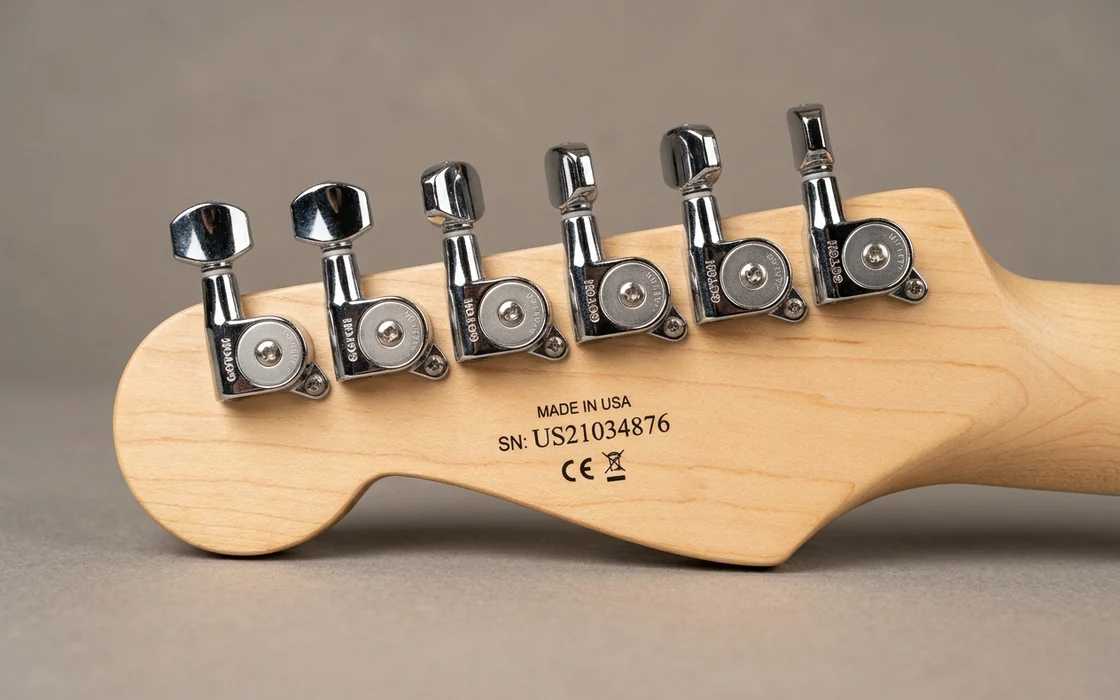
Look for the serial and country together
Check the front and back of the headstock. If the serial is not there, look at the neck plate on the back of the body. Its location changed across runs, and some instruments carry other numbers on pickups or inside the control cavity. Save the serial as printed along with any Made in or Crafted in marking. A seller's photograph of the face of a Stratocaster headstock may show the logo but omit the information needed to choose a chart.
Match the prefix to the production location
A U.S. US16 prefix points to around 2016. A Mexican MX14 points to around 2014, while MN8 belongs to the Mexican 1990s style. Japanese JV serials cover an early-1980s window. Some U.S. and Japanese letter shapes overlap, so the rest of the markings and the instrument's construction matter. U.S. vintage reissue V serials can span years and need evidence beyond the prefix.
Fender treats serial dates as approximate. A neck may have been stamped or finished before final assembly, and a bolt-on neck can be replaced. That is one reason two otherwise similar instruments may have parts marked at different times.
Gather evidence for a used instrument
Ask for sharp photos of the complete headstock, neck joint, neck plate, bridge and any accompanying receipt or case paperwork. Use Fender's country guides to see if the serial and origin agree with those features. If you need a closer date, a repair technician can examine a neck-heel stamp where appropriate. A matching serial format can support the history you were given. Originality and authentication still depend on evidence from the instrument itself.
On US16012345, US identifies the relevant Fender series and 16 suggests around 2016. On MX14123456, the MX14 prefix points to the approximate 2014–2015 Mexican range. Compare the country marking and hardware with the appropriate Fender guide before carrying the date over to a different neck. For an older guitar advertised with a JV serial, ask where the number is stamped and photograph the entire plate or bridge. A loose replacement neck can add a second, legitimate date to the history. If a listing omits the location of the serial, ask for that image before paying for an originality claim.
A buyer comparing two instruments advertised as the same year should record where the number was found on each one. A bridge stamping and a headstock decal travel with different parts when a guitar is repaired. Ask whether the seller has pictures from before a neck or bridge replacement. An early receipt with the full serial can show how the guitar was described at the time of purchase, while later photos can show which hardware changed. If the only evidence is a number in a listing title, the prefix narrows the search for a model but gives little evidence about the specific instrument.