Skip to content
SerialLookups

Star Note Lookup

Enter the complete serial with its final star, then choose the denomination and exact series. Try a sample to see a matched run and its rarity tier.

Letters and all 8 digits. Add * for a star note.

Rare star note — run of 80,000 · Run L-1: L00000001-L00080000, printed 01/2015.

Try a real example

Serial No. · US star note$1 Series 2013 star note
LFRB L12
00045678Serial number
*Star note

Rare star note — run of 80,000 Run L-1: L00000001-L00080000, printed 01/2015.

Federal Reserve Bank
L12 · San Francisco
Series
2013
Star print run
80,000 · rare

Run L-1 (80,000 notes) → Rare.

Federal Reserve Bank
L12 San Francisco
Series
2013
Denomination
$1
Run
L-1 L00000001-L00080000
Run size
80,000
Printed
01/2015
Rarity tier
Rare

Where to find the serial number

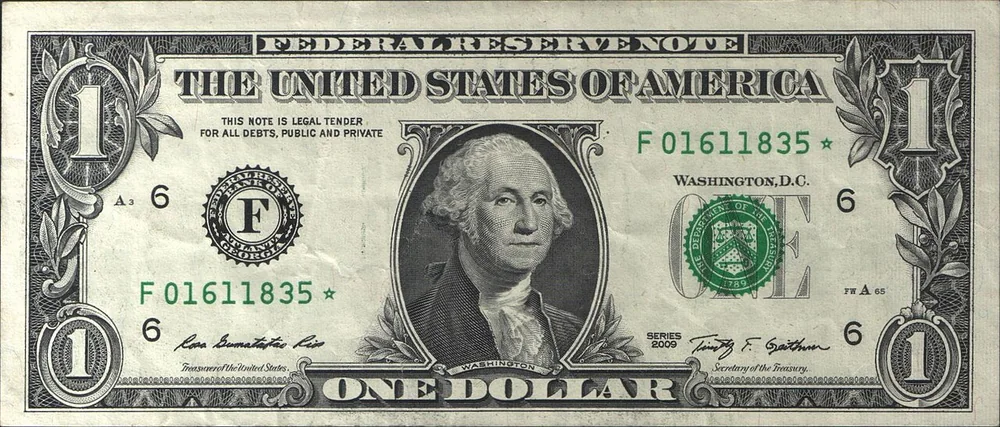
The star at the end of the serial

Series 2009 U.S. one-dollar Federal Reserve replacement note with stars after both printed serials
Star at the end
This $1 replacement note uses a star in the suffix position. Keep the district letter and all eight digits when copying it.
  1. Check the last character of either serial number. A solid star replaces the suffix letter.
  2. Note the series year next to the portrait and the Federal Reserve letter at the start of the serial.
  3. Print runs differ by series, denomination and district, so enter all three for the closest match.
  • Look for: Serial ending in ★
  • Skip: Check letter

Star note value examples by series and condition

Face value is the spending baseline. A documented run tier has no fixed dollar premium.

ExampleConditionUSD reference
Common modern $1 or $2 starCirculated$1 or $2 face value, respectively
2017A New York $2 star 00000002PMG 64$5,000 sale in 2025 (Heritage lot 22267)
2003 San Francisco $2 star 00000001PMG 65 EPQ$21,600 sale in 2019 (Heritage, 2019 Long Beach auction)

Star note series mismatches and repeated numbers

Varieties and look-alikes that change the answer more than the serial does.

Right digits, wrong series

L00045678* matches a small 2013 $1 run but the bill actually says Series 2009.

Use the series on the bill, along with the denomination and full serial. The 2013 run size cannot be borrowed for a 2009 note.

A serial one above the listed range

A Series 2013 $1 San Francisco note reads L00080001*, just after the recorded first run.

The first run ends at L00080000*. Look for a separate documented run that includes the entered number. Do not assign the first run’s print quantity to it.

Check the issue and grade before pricing a star

Grading, storage and selling checks, plus the Bureau of Engraving and Printing sources behind the rules.

Keep the run and grade separate

The run size counts notes made in that run. Grade describes the condition of the individual bill.

Compare like-for-like sales

Use the series, denomination, district and grade before comparing prices. Near-zero serials can sell at a premium of their own.

Star note print run boundaries and size tiers

The highlighted row is the rule behind the result above.

Star note run tiers and examples

CodeMeaningDetail
RareRun of 320,000 notes or fewer2013 $1 L-1 is 80,000
Less rareRun of 320,001–640,000 notes2013 $2 F-1 is 640,000
CommonRun larger than 640,000 notes2021 $1 A-2 is 3,200,000
UnverifiedNo matching run recorded hereConsult production reports

Record the entire note identifier

On a Federal Reserve replacement note, the star comes after the eight digits in place of a regular block letter. Enter it as an asterisk. Keep the prefix, including both letters on a modern higher denomination when printed. The Federal Reserve Bank letter is one part of the match. For example, an L prefix on a one-dollar Federal Reserve note identifies San Francisco. Select the printed series as well as the denomination.

Compare your serial with a run's boundaries

A run covers a range of serials. The Series 2013 San Francisco one-dollar example L00045678* fits the L-1 run, from 1 through 80,000. A neighboring run from the same district can have a different size. The available run table comes from a third-party compilation. Use the Bureau of Engraving and Printing's reports to research further, especially if your actual series or district is absent from the selector or results.

The rarity tiers refer to the size of the matched run. Fewer notes in a run can make a note of interest to someone assembling a district or series collection. It does not tell you how many survived, how many are for sale, or how many buyers want one.

Check what adds a premium

Compare your note with completed sales of the same series, denomination, bank and grade. A note heavily folded through the middle may attract fewer buyers than a crisp example from the same run. If it also has a very low or fancy serial, look for comparable sales that share the extra feature. Keep it in a currency sleeve and leave any folds or marks as you found them.

Try the Series 2009 $1 example B06410000*. The B identifies New York. The digits 06410000 give 6,410,000, which falls between 6,400,001 and 6,432,000 in the listed B-3 run. Counting both endpoints gives a run size of 32,000. This is a print quantity, and the number of surviving notes or notes sold at a particular grade is a separate question. If a reference has no matching run, check the prefix, full series and leading zero first. Keep the serial in eight-digit form in your notes when checking a boundary in the BEP production reports.
Star suffix and print run lookup questions

Short answers first. Open a question for the detail.

How can I check the value of a star note?
Find the run and then compare sales for the same series, denomination, district and condition. The star alone does not set the price.
Are star notes worth keeping?
Keep one if you enjoy collecting it. Small runs, unusual serials and excellent paper quality can make an example more desirable.
How do I know if my bill is a star note?
On a Federal Reserve note, look for a star in place of the final letter of the serial, and enter it as an asterisk.
Why did my star note return no verified run?
Coverage is limited. Check the full series and denomination, then use BEP production reports if the note is outside the runs shown here.

Photo creditsPhoto: U.S. Bureau of Engraving and Printing (banknote design) / Wikimedia Commons (Public domain)