Skip to content
SerialLookups

Silver Certificate Value Checker

Read the denomination, full series and seal first. The chart gives rough collector ranges for selected U.S. silver certificates.

Letters and all 8 digits. Add * for a star note.

1957 $1 Silver Certificate — $1.25–$2.50 · blue seal · Circulated.

Try a real example

Serial No. · US silver certificate1957 $1 Silver Certificate
QPrefix
99998988Serial number
ABlock

1957 $1 Silver Certificate — $1.25–$2.50 blue seal · Circulated.

Coolness score49/100
  • Binary1 in 8,749
  • Flipper digits1 in 256
Circulated$1.25–$2.50
Uncirculated$4–$8
Top gradedpriced individually (MS-65+)
Series
1957
Seal
blue

1957 $1 Silver Certificate. Circulated: $1.25–$2.50.

Series
1957
Denomination
$1
Seal
blue seal
Circulated
$1.25–$2.50
Crisp Uncirculated
$4–$8
Your condition
Circulated: $1.25–$2.50

Where to find the serial number

Blue seal and the words "Silver Certificate"

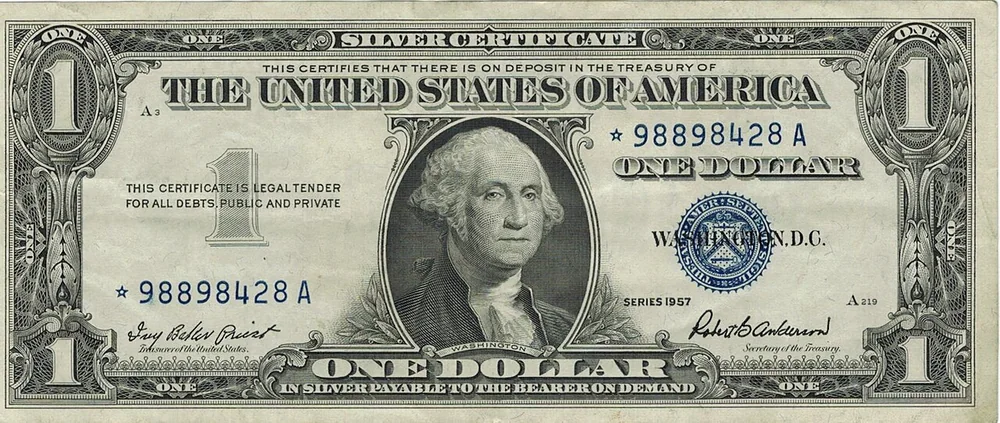
Front of a Series 1957 one-dollar silver certificate with a blue seal and stars before the serial digits
Blue serial
Series 1957 $1 silver certificate shown with a blue Treasury seal. The replacement star comes before the digits on this example.
  1. Look above the portrait: "Silver Certificate" is printed across the top of these notes.
  2. Seal and serials are blue on standard notes. Hawaii notes use brown; North Africa notes have a yellow seal.
  3. Find the series year beside the portrait. A suffix letter (1935A, 1957B) changes the value.
  • Look for: Blue serial + series year
  • Skip: Plate letter

Silver certificate value chart in U.S. dollars

Indicative ranges for representative notes. Confirm the exact variety and grade with comparable sales. A dash indicates that a range is unavailable.

Series and typeCirculatedCrisp uncirculated
1928 $1 funnyback$15–$40$40–$150+
1935–1935H $1 standard blue seal$1.50–$3$5–$15
1935A $1 Hawaii overprint$15–$40$75–$150
1935A $1 North Africa$15–$40—
1953 $5 or $10 blue seal$6–$15—
1957–1957B $1 blue seal$1.25–$2.50$4–$8

Hawaii, North Africa and red R or S varieties

Varieties and look-alikes that change the answer more than the serial does.

Hawaii overprint versus North Africa seal

A Series 1935A certificate has a non-blue seal and is advertised as Hawaii.

Check the actual color and both sides. The Hawaii issue has a brown seal and HAWAII overprints. The North Africa issue has a yellow seal.

Tiny red R or S on a blue-seal note

A 1935A $1 has a red letter on the face, but the general blue-seal result gives an ordinary range.

An original red R or S can identify an experimental-paper variety. Ask a qualified specialist to examine the mark and compare sales for that specific variety.

Compare sales for the exact silver certificate variety

Grading, storage and selling checks, plus the Bureau of Engraving and Printing sources behind the rules.

Inspect paper without changing it

Use angled light to spot folds, pinholes and stains. Store it flat in a currency sleeve.

Match the exact variety before pricing

Compare sold notes of the same denomination, series, seal, overprint and grade. Large-size issues need their own comparison.

Silver certificate series, seals and reverse designs

The highlighted row is the rule behind the result above.

Common silver certificate identification clues

CodeMeaningDetail
1928 $1Blue seal and funnyback designCheck the series letter for the exact variety
1935D $1Blue seal with Great Seal reverseCheck for wide or narrow reverse design
1935A Hawaii $1Brown seal and HAWAII overprintCompare front and back
1957 $1Blue seal and IN GOD WE TRUST on reverseRecord 1957, 1957A or 1957B as printed

Read the title above the portrait

Look for the words Silver Certificate on the front, then note the denomination and the complete series. The suffix matters. 1957, 1957A, and 1957B are distinct series. A blue Treasury seal is a clue for many small-size certificates, and a brown seal with HAWAII overprints or a yellow seal identifies a wartime variety when the rest of the note agrees. Photograph both faces to capture the reverse design and any overprint.

Compare the right size and variety

A small-size 1928 one-dollar funnyback, an ordinary 1935D one-dollar note and a larger 1899 Black Eagle need separate comparisons. The 1935 family, for example, includes changes to the reverse and wartime issues. Some 1935G notes carry IN GOD WE TRUST and others do not. Before comparing prices, write down the exact series, seal, and variant. On some silver certificate replacements, the star precedes the digits. If yours has one, record its actual position in your notes and use the star option to flag the variety.

Treat the chart as a range for typical notes

Check for creases, paper loss, surface marks, and handling at the edges. A note that has been pressed flat can still show fold lines. Compare completed sales with the same grade and catalog variety, including the distinction between graded singles and multi-note lots. A higher denomination also needs its own comparison, even if its seal is the same color as a one-dollar bill.

A genuine silver certificate can still be spent at face value. The silver redemption program ended in 1968. Collector value depends on the paper in your hand and the demand for that particular issue.

On Q99998988A, enter all eight digits and choose the series printed on the bill before comparing values. If the note reads 1957, keep it separate from 1957A and 1957B when looking for exact comparisons. A 1935D example may require a reverse-design check as well. Photograph the full front and back in neutral light and note any staining that makes the seal color hard to judge. Keep printed replacement stars separate from handwritten markings. On the pictured 1957 note the star appears where a prefix would otherwise sit, so compare the serial format within the silver certificate issue.

For a 1935A wartime candidate, keep the front and back together while you check the overprint. Compare the note with a documented example of the same denomination first. A green-seal Federal Reserve note with the same denomination is a poor comparison even if the overall layout looks familiar. If the seller calls out a red letter, take a close-up and keep the full-note image too. The location and appearance of the mark matter, and a close-up alone makes it harder to see whether the base certificate matches the claim. Leave a note unaltered while you get a second opinion about ink, staining or repairs.
Silver certificate identification and value questions

Short answers first. Open a question for the detail.

How much is a Series 1935D $1 silver certificate worth?
Typical circulated notes in the 1935 family are around $1.50–$3. Compare 1935D wide or narrow varieties and check grade before pricing yours.
What makes a 1957 silver certificate valuable?
Strong original paper, a collectible serial or a scarce variety can add a premium. Many ordinary circulated 1957 notes bring only a small premium.
Who buys old silver certificate dollar bills?
Paper money dealers, coin shops that handle currency, and collectors may buy them. For a scarce example, ask for an assessment tied to the exact variety.
Can you still cash in a silver certificate?
It remains legal tender at face value. The Treasury stopped exchanging silver certificates for silver in 1968.
Does this chart price an 1899 Black Eagle or a $2 silver certificate?
Use sales of the same large-size design, catalog variety and grade. The standard ranges here concentrate on selected small-size issues.

Photo creditsPhoto: U.S. Bureau of Engraving and Printing (banknote design) / Wikimedia Commons (Public domain)